

Upper body strength for the fit outdoorsman isn’t about chasing a pump or filling out a T-shirt. It’s about capability. It’s about having the strength to pull your body uphill, stabilize under fatigue, carry awkward weight, and keep moving when conditions aren’t ideal.
Outdoors-focused training demands more than machines and mirror muscles. It requires durability, balance, and control—especially through the back, shoulders, and grip. These are the systems that determine whether your upper body holds up after hours of work, movement, or exposure.
This four-week upper body program is designed to build real-world strength that transfers outside the gym—onto trails, into the mountains, and through long days that don’t care how much you bench.
What Upper Body Strength Really Means Outdoors
In controlled environments, upper body training is often isolated and predictable. Outdoors, nothing is isolated.
You’re pulling while tired. Stabilizing while off-balance. Carrying loads that don’t distribute evenly. Holding positions longer than expected. Upper body strength becomes a blend of force production and fatigue resistance.
The outdoorsman who trains only presses and curls will eventually feel the gap. The one who prioritizes back strength, shoulder integrity, and grip endurance builds a body that lasts.
This is why the foundation of outdoor upper body training looks different:
- Back over chest
- Stability over maximal load
- Grip endurance over aesthetics
 Priority Muscle Groups for the Fit Outdoorsman
1. The Back: Your Primary Engine
Your back is responsible for pulling, posture, and load control. A strong back supports long carries, climbing movements, and sustained effort under fatigue.
Key patterns:
- Vertical pulls (pull-ups, lat pulldowns)
- Horizontal pulls (rows, carries)
- Scapular control (face pulls, Y-raises)
If you can’t maintain posture and pulling strength late into a session, outdoor performance breaks down fast.
2. The Shoulders: Durability Over Size
Shoulders take abuse outside. They stabilize loads, absorb impact, and support movement in awkward positions.
The goal isn’t max overhead strength—it’s joint integrity:
- Controlled pressing
- Rotator cuff strength
- Scapular stability
Healthy shoulders allow you to train consistently without setbacks.
3. Grip: The Silent Limiter
Grip strength often fails before the rest of the body. If your hands give out, everything stops.
Grip training should be:
- Frequent
- Varied
- Fatigue-resistant
Carries, hangs, and thick-grip work build hands that don’t quit when conditions get rough.
The 4-Week Upper Body Training Program
This program uses two upper body sessions per week, designed to complement lower body and conditioning days later in the week.
Weekly Structure
- Day A: Pull-Dominant Strength
- Day B: Push + Stability
Rest at least 48 hours between upper body sessions.
Day A – Pull Dominant
1. Pull-Ups or Assisted Pull-Ups
4 sets × 6–10 reps
Control every rep. Full hang to chest-to-bar if possible.
2. Barbell or Dumbbell Row
4 sets × 8–10 reps
Neutral spine. No jerking.
3. Single-Arm Dumbbell Row (Offset Stance)
3 sets × 10 reps per side
Adds unilateral stability and core engagement.
4. Face Pulls or Band Pull-Apart
3 sets × 15–20 reps
Focus on scapular control, not load.
5. Farmer Carries
4 rounds × 40–60 yards
Heavy enough to challenge grip, light enough to maintain posture.
Day B – Push + Stability
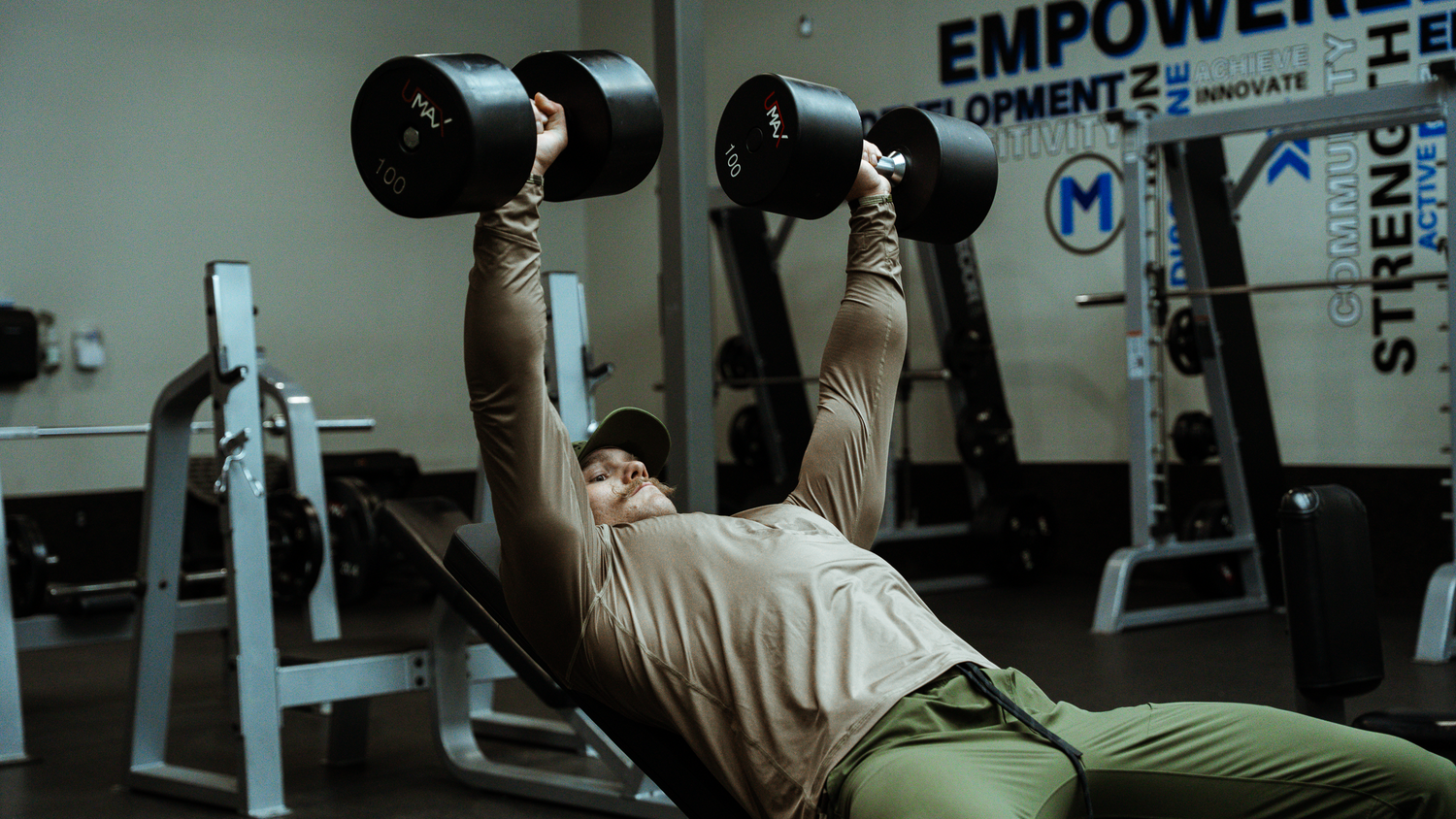
1. Dumbbell Bench Press
4 sets × 8–10 reps
Dumbbells allow shoulder freedom and stability demand.
2. Standing Overhead Press (Moderate Load)
3 sets × 6–8 reps
No grinding reps. Stop short of failure.
3. Push-Ups (Tempo Controlled)
3 sets × max reps
Slow descent, controlled lockout.
4. Lateral Raises
3 sets × 12–15 reps
Build shoulder endurance, not ego.
5. Dead Hang Holds
3 rounds × max time
Grip endurance under fatigue.
 Weekly Progression Strategy
The goal across four weeks is controlled progression, not burnout.
- Week 1: Learn the movements, leave reps in reserve
- Week 2: Add small weight increases
- Week 3: Push volume (extra set on main lifts)
- Week 4: Reduce volume slightly, maintain intensity
This approach builds strength while protecting joints and connective tissue—critical for outdoor longevity.
How This Transfers Outside
Strong backs maintain posture during long days of movement. Stable shoulders reduce overuse issues when carrying or climbing. Reliable grip allows you to stay focused on movement, not failure.
This isn’t gym strength for show. It’s strength that:
- Holds up under fatigue
- Supports long efforts
- Allows consistency week after week
That consistency is what builds real capability.
Recovery and Shoulder Longevity
Upper body recovery is often overlooked.
Prioritize:
- Light band work on off days
- Shoulder mobility before sessions
- Warm muscles during cold starts
On colder mornings or outdoor sessions, layering matters. A piece like the Summit Hoodie helps maintain muscle temperature during warm-ups and rest periods without restricting movement.
Compression pieces, such as Compression Tights, also support circulation and warmth during early training sessions or recovery work.
Apparel That Supports the Work
Training outdoors—or training like you live outdoors—demands gear that performs quietly in the background.
- The Daily Tee provides a breathable base layer that doesn’t restrict pulling or pressing movements.
- The Summit Hoodie is ideal for cold starts, outdoor circuits, or between sets when temperatures drop.
- Compression Tights support joints, regulate temperature, and help recovery without distraction.
When gear disappears from your thoughts during training, you can focus on the work.
 How This Fits Into the Full January Program
This upper body program is one pillar of the full January training structure.
In the coming weeks, you’ll layer in:
- Lower body strength built for uneven terrain
- Core training focused on stability and control
- Conditioning that builds an engine for sustained effort
Each piece works together to create a body that performs—not just looks the part.
